PTSD Treatment in Las Vegas: Your Options and How to Choose

Looking for PTSD treatment in Las Vegas? You have more than one option. At Family Trauma Treatment Center, people often begin with individual counseling with a licensed, trauma-informed clinician, and a plan can also include Forward-Facing Trauma Therapy, virtual reality exposure therapy, or other support, depending on your needs. A clinician helps you choose, at your own pace, with no pressure to share more than you are ready to.
This guide walks through how PTSD can look, the options we offer, how they differ, and what to ask when choosing a provider. It is meant to help you prepare, not to diagnose or to replace care from a licensed professional.
What PTSD can look like
The short answer: persistent symptoms after a traumatic event that interfere with daily life.
Our conditions we treat page describes post-traumatic stress disorder (PTSD) as persistent symptoms following a traumatic event, such as flashbacks, avoidance or heightened anxiety, that interfere with daily life. It also describes complex trauma, the lasting effects of repeated or prolonged traumatic experiences, often from childhood, that can affect emotional regulation, relationships and self-image.
Trauma can show up differently in children, teens and adults. In children it may look like defiance, emotional outbursts, withdrawal or difficulty at school, and it is often best addressed alongside a parent or caregiver. You do not need to match a description exactly to deserve support, and you do not need a diagnosis to ask for help. A licensed clinician can talk through what you have been experiencing, what it might mean and where it makes sense to begin. Online questionnaires can help you find words for it, but they are informational only. Many people wait a long time before reaching out, often because they are unsure whether what they feel is serious enough. If it is affecting your sleep, your relationships, your work or how safe you feel, it is reason enough to ask.
What this looks like at FTTC
The short answer: several approaches, chosen together with you.
Our care is built around one idea: there is no single path. A plan might use one approach or several, and it can change as you do. Here is a quick map of what we offer for people dealing with trauma:
| Approach | What our site says | Best to ask about if |
|---|---|---|
| Individual counseling | Weekly one-on-one sessions with a licensed, trauma-informed clinician | You want a steady place to work through what happened |
| Forward-Facing Trauma Therapy | A present-focused practice of self-regulation combining CBT and brain science | You want practical tools to stay grounded under stress |
| Virtual reality therapy | Clinician-controlled virtual environments for facing fears and triggers | Triggers are a big part of the picture |
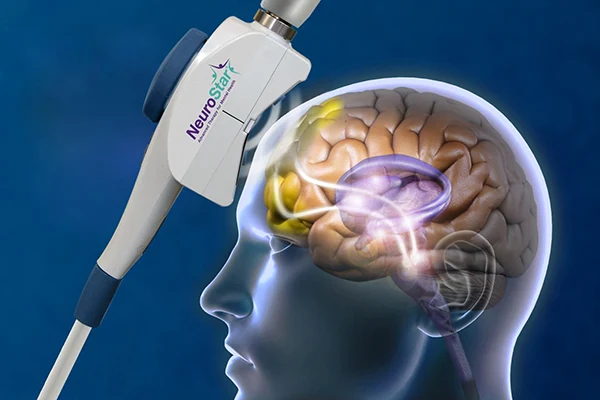
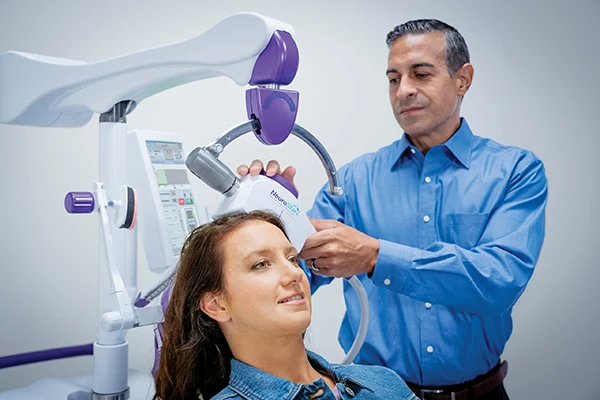
| NeuroStar TMS | A drug-free treatment for depression | Depression is part of what you are experiencing |
We offer care in person at 3909 South Maryland Parkway, Suite 405, Las Vegas. Not every approach is right for every person, and an honest evaluation should say so.
Individual counseling: where many people begin
The short answer: a weekly, one-on-one space built around you.
Our individual counseling page describes a confidential process where you work one-on-one with a licensed, trauma-informed clinician. Sessions are usually weekly and are built around a plan you set together, with practical tools, tracked goals and your own pace. PTSD is among the concerns the page lists, along with anxiety, depression, grief and loss, and relationship difficulties.
A first session is a conversation, not an evaluation. You talk about your history, your goals and a starting point, with no pressure to share more than you are ready to. There is no fixed timeline: some clients attend for a few months, while others build a longer relationship with their clinician.
Counseling can also be paired with other care. Our site says many clients combine it with group counseling, NeuroStar TMS or Alpha-Stim as part of a fuller plan.
Forward-Facing Trauma Therapy: tools for the present
The short answer: practical self-regulation skills, with a focus on the present.
Our site describes Forward-Facing Trauma Therapy as a disciplined practice of self-regulation that combines cognitive behavioral therapy and brain science. It is present-focused: it builds real-time regulation skills rather than dwelling primarily on the past, and it is aimed at staying grounded and functional under stress, at work, at home and in relationships.
It is best suited, according to our site, to people managing complex trauma or chronic stress responses who want practical tools for staying grounded. It is often used alongside individual counseling as part of a broader plan. If you want to know whether this approach would suit you, ask about it at your first visit.
Virtual reality exposure therapy: facing triggers at your pace
The short answer: a clinician-controlled virtual environment, with you setting the pace.
Our virtual reality therapy page lists PTSD among the conditions it can help with, alongside phobias, panic disorder, social anxiety, OCD and generalized anxiety. Sessions take place in a private room with a headset that places you in a virtual environment tied to your specific fear. Your therapist sees what you see and controls intensity, length and pacing, and our site says nothing moves faster than you are ready for. No real-world exposure is required to start.
A licensed clinician controls the pace and intensity in real time, and all equipment is provided in the office. If thinking about confronting triggers feels overwhelming, ask how the clinician would pace this for you.
NeuroStar TMS and other supports
The short answer: TMS is a depression treatment, and other supports can sit alongside therapy.
Trauma and depression often appear together. Our NeuroStar TMS therapy page describes TMS as a drug-free, non-invasive treatment for depression, and a clinician confirms whether it is appropriate for you. It is not described as a treatment for PTSD itself. If depression is part of what you are living with, ask whether TMS belongs in your plan.
Other supports, such as group counseling and Alpha-Stim, are also part of our services, and some clients pair them with counseling. If you are curious, ask about group counseling or Alpha-Stim when you talk with your clinician.
How to choose a PTSD provider in Las Vegas
The short answer: look for trauma-informed care, honest answers and a pace that suits you.
When comparing providers, consider:
- Trauma-informed approach. Does the clinician understand how trauma affects people, and do they let you set the pace?
- Clear explanations. Can they explain what a plan would look like and why, in plain language?
- Your comfort. Do you feel heard? Fit with a clinician matters, and it is fine to ask questions.
- Practical fit. Location, hours and scheduling should work for your life. Our hours are Monday–Friday 8:00 am–7:00 pm and Saturday 9:00 am–3:00 pm, with Sunday by appointment only.
- Honesty. A good provider will say when something is not the right fit and point you toward what is.
Questions to bring to a first visit:
- What approaches would you consider for me, and why?
- How will we know whether the plan is working?
- How does confidentiality work?
- How could different treatments fit together?
- What can I do between sessions to support myself?
What a first visit can look like
Our site describes a first counseling session as a conversation about your history, your goals and a starting point. You choose how much to share. It can help to bring a few notes: when symptoms started, what makes them better or worse, what you have tried before, and what you would most like to change. If you are unsure where to begin, say so; the clinician can help you find a first step.
Choosing between approaches
You do not have to decide alone. As a rough guide, people who want a steady place to talk often begin with individual counseling. People who want practical, present-focused skills may ask about Forward-Facing Trauma Therapy. Those for whom specific triggers are central may ask about virtual reality therapy, and those who also have depression may ask about TMS. These are starting points for a conversation, not rules, and a clinician helps match them to your situation.
If you are looking for care for a child or teen
Our conditions page notes that trauma in children can appear as defiance, emotional outbursts, withdrawal or difficulty at school, and that it is often best addressed alongside a parent or caregiver. Our cognitive behavioral therapy page describes trauma-focused CBT, which is geared toward young people affected by trauma and often involves caregivers in treatment. Ask the team which approach fits your child.
If you need help right now
If you are in crisis or thinking about harming yourself, do not wait for an appointment. Call or text 988, the Suicide & Crisis Lifeline, or call 911 in an emergency.
Book a consultation
If you are ready to talk about PTSD treatment in Las Vegas, we are glad to help you find a starting point. Call (702) 485-1313 or request an appointment. You can also read about individual counseling at FTTC.
Hours: Monday–Friday 8:00 am–7:00 pm, Saturday 9:00 am–3:00 pm, Sunday by appointment only.
This article is educational and does not replace evaluation by a licensed professional.
In crisis? Call or text 988. Emergency: call 911.
What is the first step in getting PTSD treatment?
Reach out and ask for a first appointment. Our site describes a first counseling session as a conversation rather than an evaluation, covering your history, your goals and a starting point, with no pressure to share more than you are ready to. You do not need to have everything figured out beforehand.
How long does PTSD treatment take?
There is no fixed timeline, and we cannot predict it for any one person. Our individual counseling page says some clients attend for a few months while others build a longer-term relationship with their clinician. Your plan is set together with your clinician and reviewed along the way.
Can I combine different PTSD treatments?
Often, yes. Our site says many clients pair individual counseling with group counseling, NeuroStar TMS or Alpha-Stim as part of a fuller plan, and that Forward-Facing Trauma Therapy is often used alongside individual counseling. A clinician helps decide which combination fits your situation.
Is PTSD counseling confidential?
Yes. Our individual counseling page states that sessions take place in a safe, confidential environment in accordance with HIPAA. If you have questions about what is shared and with whom, ask your clinician at the start so you know how privacy works in your own situation.
What if I am not sure I have PTSD?
You do not need a diagnosis to ask for help. A licensed clinician can talk through what you have been experiencing and what it might mean, and can suggest where to begin. Screening questionnaires online can help you find words for it, but they are informational and are not a diagnosis.