What Is Neurofeedback and Does It Work? A Plain-Language Guide
Written by Family Trauma Treatment Center

Neurofeedback is a non-invasive way of showing you your own brain activity in real time so you can practice changing it. Some people report benefits, such as feeling calmer or more focused, but research findings are mixed, and it is not a cure or a guarantee. At Family Trauma Treatment Center in Las Vegas, neurofeedback is one of the options we offer, and a first conversation can help you decide whether it is worth exploring.
This guide explains what neurofeedback is, how a session works, what is and is not known about whether it works, and how to decide if it is right for you.
What is neurofeedback?
The short answer: it is a form of brainwave training that uses a computer to give your brain feedback about how it is working.
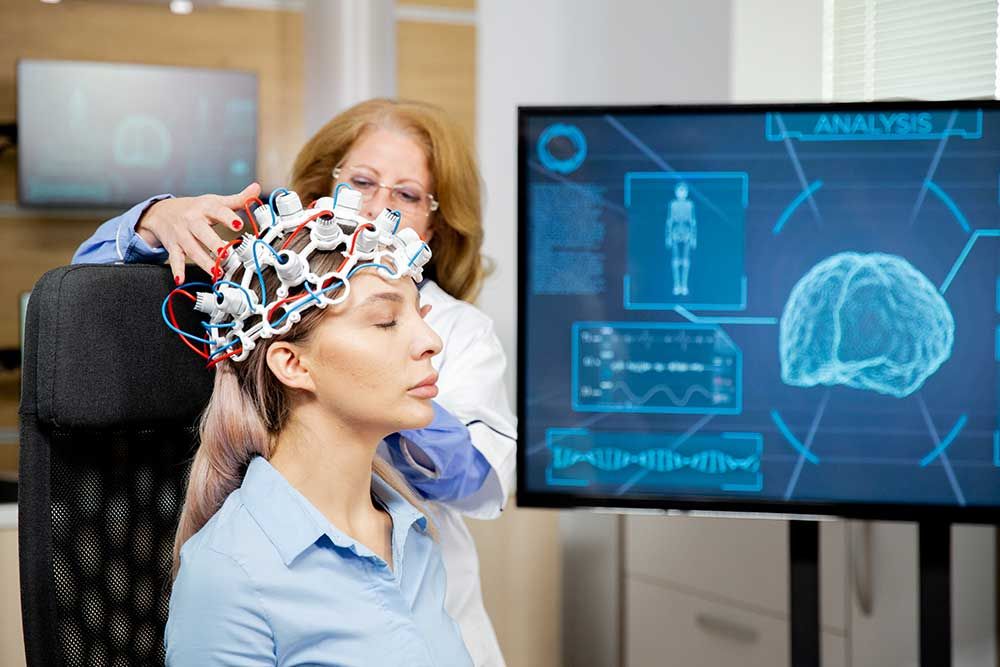
Neurofeedback is also called EEG biofeedback, neurotherapy or brainwave training. Sensors on the scalp record the electrical activity of the brain, which is measured with an EEG (electroencephalogram). A computer turns that activity into feedback you can see or hear, often a game, a movie or music.
All neurofeedback methods share the same basic parts: EEG sensors that monitor your brainwaves, and a computer that sends feedback back to you. The sensors act like tiny microphones, listening and recording. They do not stimulate the brain.
How does neurofeedback work?
The short answer: your brain is rewarded when its activity moves into a more balanced range, and it learns from that.
The feedback, whether a game or a video, plays smoothly only when your brainwaves are functioning within an optimal range. That smooth playback acts as a reward for your brain. When your brainwaves are not in that range, the movie pauses or the music stops. This signals that something is out of balance and prompts your brain to “figure out” how to return to a seamless experience.
This kind of learning is called operant learning, which means behavior changes through feedback and repetition. The aim is to support self-regulation and relaxation, which are both part of healthy brain function.
You do not need to do anything mentally strenuous. Many people simply watch, listen and let the process run, while the clinician explains what the screen is showing.
What happens in a neurofeedback session?
The short answer: you sit comfortably, sensors are placed, and you watch or listen while the feedback runs.
A typical session looks something like this:
- Preparation. A clinician places the sensors on your scalp and checks that they are recording well.
- Feedback. You watch a video, play a simple game or listen to audio. The picture or sound responds to your brainwaves.
- Review. Afterward, you and the clinician talk about how it went and what you noticed.
Because the learning happens through repetition, neurofeedback is usually done as a series of sessions rather than a single visit.
Does neurofeedback work?
The short answer: some people report real benefits, but the evidence is mixed and results vary.
Here is an honest way to think about it:
- Many people report feeling more relaxed or focused, and clinicians who use neurofeedback describe it as one tool for self-regulation.
- Researchers do not all agree about how strong the evidence is for different conditions. Studies differ in design, quality and results.
- Results vary from person to person. No clinic can promise a particular outcome.
- Progress is usually gradual. Look for small, steady changes rather than a sudden shift.
If a provider promises that neurofeedback will cure a condition, treat that as a warning sign. A good clinician will talk about what is known, what is uncertain and how you will both tell whether it is helping.
Who might consider neurofeedback?
The short answer: people who want a drug-free, practice-based approach and can commit to a series of sessions.
Neurofeedback may be worth a conversation if:
- You want a non-medication option, with or without other supports.
- You are interested in a gradual, skills-style approach instead of a quick fix.
- You are dealing with stress, anxiety, difficulty focusing or the after-effects of trauma, and want to understand your options. Our neurofeedback page describes brainwave training as supporting trauma recovery, focus and emotional regulation.
- You like the idea of seeing feedback about your own body and brain.
If you are specifically wondering about attention difficulties, read our guide to neurofeedback for ADHD in Las Vegas, which covers what to ask and what is uncertain.
When might neurofeedback not be the right first step?
The short answer: when you do not yet know what is causing your symptoms, or when you need urgent help.
- If you have not been evaluated, an assessment by a qualified professional usually comes first. Many different things can cause similar symptoms, including anxiety, poor sleep, medical conditions and trauma.
- If you are in crisis or worried about your safety, contact a crisis service first. The numbers are at the end of this page.
- If you need fast change, be aware that neurofeedback is typically a series of sessions.
- If you take medication, keep your prescriber informed and do not change anything on your own.
How does neurofeedback compare with other approaches?
The short answer: it is one option among several, and many people combine them.
| Approach | What it involves | Often a good fit when |
|---|---|---|
| Counseling or CBT | Talking with a clinician and practicing skills | You want tools for thoughts, habits and emotions |
| Neurofeedback | EEG-based brainwave training | You want a drug-free, practice-based option |
| Medication | Prescribed and monitored by a medical provider | A prescriber recommends it after evaluation |
None of these is either-or. A good plan is built around the person, not around a single method.
What does neurofeedback look like at FTTC?
At FTTC, neurofeedback is one of several services we offer at our office at 3909 South Maryland Parkway, Suite 405, in Las Vegas, alongside individual counseling, group counseling, NeuroStar TMS, Alpha-Stim and other approaches. Care is in person.
Our neurofeedback page describes EEG sensors that monitor your brainwaves and a computer that sends feedback back to you, in the form of a game or a video. Sessions are usually 45 to 55 minutes and are usually weekly, though your own schedule is set with your clinician.
You can also look at our conditions we treat page for an overview of our areas of focus, and ask us how neurofeedback might fit with other care.
What questions are worth asking a neurofeedback provider?
The short answer: practical, specific ones, and a good clinician will welcome them.
- What will a session involve, and what will I actually be doing?
- How will we decide together whether it is helping, and when will we review?
- What does the research say for someone with my symptoms, and how strong is it?
- How does this fit with counseling or medication I already have?
- What will we do if it does not help?
It also helps to keep a simple record before you start: how you sleep, how your mood and focus feel in a typical week, and what you notice after each session. Bring those notes to your appointments. If little has changed after a fair trial, that is useful information, and a clinician can help you adjust the plan.
Book a consultation
If you are curious about neurofeedback, we are glad to talk it through with no pressure to commit. Call (702) 485-1313 or request an appointment. You can read more about neurofeedback at FTTC first.
Hours: Monday–Friday 8:00 am–7:00 pm, Saturday 9:00 am–3:00 pm, Sunday by appointment only.
This article is educational and does not replace evaluation by a licensed professional.
In crisis? Call or text 988. Emergency: call 911.
This article is general information, not medical advice or a substitute for professional care, and it does not create a therapist-client relationship. If you are in crisis call 911, or call or text 988.
Is neurofeedback the same as EEG biofeedback?
Yes, the terms are used interchangeably. Neurofeedback is also called EEG biofeedback, brainwave training or neurotherapy. All of them describe the same basic idea: sensors record brain activity, and a computer gives you feedback so your brain can practice working in a more balanced range.
Does neurofeedback hurt?
Neurofeedback is non-invasive. Sensors rest on the scalp and only record activity; they do not send electricity or anything else into the brain. Most people describe sessions as sitting and watching a screen or listening to audio. If anything feels uncomfortable, tell your clinician so they can adjust or pause.
How many neurofeedback sessions do people need?
There is no single number. Neurofeedback is usually a series of sessions because it works through repeated practice, and the right length depends on your goals and how you respond. A clinician can describe what a plan might look like after meeting you, and review progress with you along the way.
Does neurofeedback work for anxiety?
Some people report feeling calmer after neurofeedback, but research findings are mixed and results vary. It should not be presented as a guaranteed fix. If anxiety is your main concern, a clinician can explain what is and is not known, and how neurofeedback might fit alongside counseling or other support.
Can I do neurofeedback with other treatment?
Many people combine approaches, such as counseling alongside neurofeedback. Please do not stop or change any prescribed medication on your own. Tell every provider involved in your care what you are trying so that they can work together, and so that you get a plan built around your history.