Treatment-Resistant Depression Options in Las Vegas

What are your treatment-resistant depression options in Las Vegas? If depression has not eased enough with the care you have tried, you still have choices. People often explore counseling, a review of their medication plan with a prescriber, and non-medication options such as NeuroStar TMS. A licensed clinician can look at your history and help you decide which of these to discuss first.
Feeling stuck after trying treatment can be discouraging, and it does not mean you are out of options or that nothing will help. This guide explains the phrase, lays out what you can ask about, and shows how to take a next step. It is not a substitute for evaluation by a licensed professional.
What “treatment-resistant” can mean
The short answer: depression that has not improved enough with the care tried so far.
There is no single definition. It can mean medication has not relieved symptoms enough, that a medication stopped working over time, or that side effects made it hard to continue. The label can also vary by clinician and insurance plan.
What matters more than the label is your own story: what you tried, for how long, how it felt, and what you want to be different. That is the starting point for any good conversation about next steps.
Our conditions we treat page notes that depression can develop after trauma or alongside other life stressors, including cases that have not responded well to treatment before. You do not need to have all the answers before you reach out.
Start with what you have already tried
A simple list makes every appointment more useful. Before you meet with a new clinician, write down:
- Each treatment you have tried, roughly when, and for how long.
- What helped, even a little, and what did not.
- Side effects that were hard to live with.
- Your current medications and supplements.
- What you hope to feel or do again, such as sleep, energy, focus or interest in people.
Bring the list to your prescriber and to any consultation. It helps everyone avoid repeating what has not worked.
Option 1: review the plan with your prescriber
The short answer: your prescriber is the right person to ask about medication, and changes should always be made together.
If you take medication, ask your prescriber how it is working and whether anything in your plan could be adjusted. Do not stop or change a medication on your own. Medication management with a prescriber who knows your history is a core part of care for many people.
Useful things to ask: How will we know whether this is working, and when should we check in again? What side effects should I report right away? Are there other options we have not discussed? Would it help to add counseling or another kind of support alongside what I am taking? Write the answers down so you can bring them to any other clinician you see.
Option 2: counseling that fits your pace
The short answer: weekly, one-on-one counseling gives you a steady place to work through what is underneath.
Our individual counseling page describes weekly one-on-one sessions with a licensed, trauma-informed clinician, built around a plan you set together, with practical tools, tracked goals and your pace. A first session is a conversation, not an evaluation, with no pressure to share more than you are ready to.
Counseling can be a good fit alongside medication, and many clients pair it with other treatments, such as group counseling, NeuroStar TMS or Alpha-Stim, as part of a fuller plan.
Our site notes there is no fixed timeline: some clients attend for a few months, others build a longer relationship with their clinician. Sessions are confidential, in line with HIPAA. If you have felt unheard in past treatment, it is fine to say so in your first session and to ask how the clinician works.
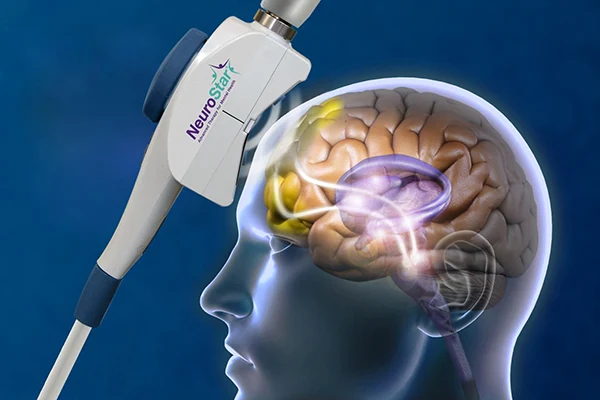
Option 3: NeuroStar TMS, a non-medication option
The short answer: TMS is a drug-free option that is discussed when medication has not helped enough or cannot be tolerated.
At FTTC, we offer NeuroStar TMS therapy. Our NeuroStar page describes it as FDA-cleared, drug-free and non-invasive. It describes TMS as an alternative for people who are not responding to, or cannot tolerate, medications, and notes that it is not a first-line treatment.
A typical initial course is about 19–37 minutes of treatment daily over four to six weeks, according to our site. You are awake during sessions and can return to normal activities right away. The most common side effects reported in clinical trials were headache and scalp discomfort, generally mild to moderate. A clinician must confirm whether TMS is appropriate for you.
Putting the pieces together
The short answer: the best plan is often a combination built with your clinicians.
There is rarely one answer. A plan might include medication management with your prescriber, weekly counseling, and TMS when a clinician believes it is appropriate. Our team can talk with you about how these pieces could fit together and what order makes sense for your situation.
It is also worth thinking about what support you have around you: people you trust, a regular routine, and ways to stay connected on difficult days. These do not replace treatment, but they make it easier to keep going.
Progress is often gradual and uneven. Rather than waiting for a big change, many people find it helpful to track small signals, such as how they are sleeping, how much energy they have, and whether they are interested in things again, and to share those notes with their clinicians.
Worries that are common after treatment has not worked
- “What if this fails too?” It is a fair fear. Say it out loud to your clinician, and ask how you will both know whether a plan is helping and what the next step would be.
- “I do not want to start over.” You do not have to. Your history is the starting point, and a good clinician builds on what you have already learned about yourself.
- “I cannot manage another big commitment.” Tell the team what your week looks like. Plans can be matched to your schedule, and our site describes sessions built around your pace.
What this looks like at FTTC
At FTTC, the first step is a conversation about your history and your goals. We offer individual counseling and NeuroStar TMS at our Las Vegas office at 3909 South Maryland Parkway, Suite 405, and a clinician can help you work out which services to start with.
Not every option is right for every person. If TMS or counseling is not the best next step for you, an honest evaluation should say so and point you toward what is.
Questions to ask at your first visit, and where to turn right now
- Given what I have tried, which options make sense to discuss?
- Would counseling, TMS or a combination fit my situation?
- How would any new treatment work alongside my current medication?
- What would a realistic schedule look like for me?
- What side effects should I know about?
- What can I do between appointments to support myself?
If you are in crisis or thinking about harming yourself, do not wait for an appointment. Call or text 988, the Suicide & Crisis Lifeline, or call 911 in an emergency. Reaching out is a strong and sensible first step.
Book a TMS consultation
If you would like to talk through your treatment-resistant depression options, we are glad to help. Call (702) 485-1313 or request an appointment. You can also read about NeuroStar TMS therapy at FTTC.
Hours: Monday–Friday 8:00 am–7:00 pm, Saturday 9:00 am–3:00 pm, Sunday by appointment only.
This article is educational and does not replace evaluation by a licensed professional.
In crisis? Call or text 988. Emergency: call 911.
What does treatment-resistant depression mean?
The phrase is used when depression has not improved enough after trying treatment. There is no single definition, and it can vary by clinician and insurance plan. If you feel stuck, the useful step is a conversation about what you have tried and what happened, so a clinician can talk through the options that may fit.
If one antidepressant did not work, will others fail too?
Not necessarily, and we cannot predict that for any one person. People respond differently, and a prescriber may adjust a plan in several ways. Do not change or stop medication on your own. Talk with your prescriber, and ask whether adding counseling or another option could help.
Can TMS help when medication has not worked?
Our NeuroStar page describes TMS as an alternative for people who are not responding to, or cannot tolerate, medications. It is not a first-line treatment, and a clinician must confirm whether it is appropriate for your situation during a consultation. It does not work for every person.
Is counseling still worth trying if medication has not helped?
Often, yes. Counseling gives you a weekly space to work with a licensed, trauma-informed clinician on a plan you set together. Our site notes many clients pair counseling with other treatments as part of a fuller plan, so it does not have to replace medication or other care.
Where should I start if I feel hopeless?
Reach out to someone today, whether that is our office at (702) 485-1313, your prescriber or a trusted person. If you are thinking about harming yourself, call or text 988 or call 911 right now. You do not have to wait for an appointment to ask for help.