What to Expect During Your First TMS Session in Las Vegas
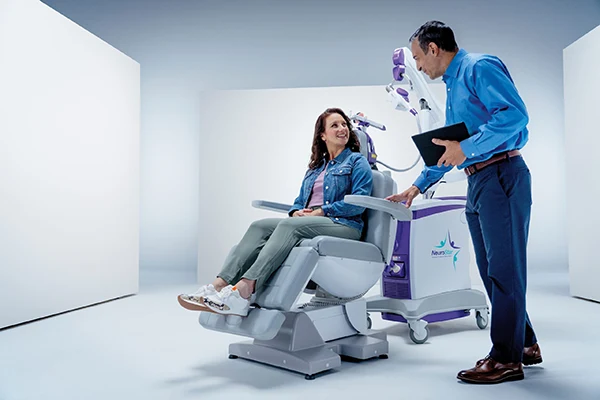
What should you expect during your first TMS session? A quiet, seated appointment. You recline in a treatment chair, a clinician positions a small magnetic coil lightly on your head, and you stay awake while the pulses are delivered. At Family Trauma Treatment Center, our NeuroStar TMS therapy page says you can return to normal activities right away.
Nerves before a first appointment are normal, and not knowing what happens in the room is often the biggest worry. This guide walks through the visit step by step so you know what to expect before you book. It is meant to ease the unknown, not to replace the advice of your clinician.
Before the first session: a consultation
The short answer: a conversation comes first, and it is not a commitment.
Our site invites you to schedule a consultation with our NeuroStar Coordinator to learn whether this treatment is right for you. A clinician then confirms whether TMS is appropriate for your situation. Many people bring a short list of what they have tried before and what has or has not helped, along with any questions about the schedule.
If you are still wondering whether you would be a candidate, our guide to who qualifies for TMS therapy in Las Vegas explains how eligibility is usually discussed.
A little preparation can make the day calmer:
A little preparation can make the day calmer:
- Write down the questions you most want answered.
- Make a short list of treatments you have tried and what happened.
- Bring your current medications, including any supplements.
- Wear comfortable clothing you can relax in.
- Plan a little extra time, and avoid a packed schedule right afterward.
- Tell the team about any changes in your health since your consultation.
What to expect during your first TMS session, step by step
The short answer: it follows a simple order, and your clinician will confirm the details for you.
You check in at our office at 3909 South Maryland Parkway, Suite 405, in Las Vegas. Sessions take place in a treatment room, and a team member explains what will happen before anything begins. This is a good time to mention anything that is worrying you, however small. If anything about your health has changed since your consultation, say so: the team can only plan around what they know.
- Check-in and a short chat. The team confirms how you have been feeling and answers any last questions.
- Getting comfortable. You settle into the reclining chair, and the team makes sure you are at ease before starting.
- Coil placement. A clinician positions the small coil lightly on your head and explains what you will hear and feel.
- Treatment. You stay awake while the pulses are delivered. You can speak up at any point if something feels wrong.
- Wrap-up. The team checks in about how it went, answers questions and tells you what to expect at your next visit.
Every clinic works slightly differently, and your own plan may vary, so treat this as a general picture and ask the NeuroStar Coordinator what your first day will look like.
What the treatment chair and coil are like
The short answer: you recline comfortably while a small, curved coil rests lightly on your head.
Our NeuroStar page describes the setup this way: you recline in the treatment chair and a small, curved magnetic coil is positioned lightly on your head. The coil is placed over an area of the brain that is thought to be involved in mood. The clinician stays with you and can adjust things if something is uncomfortable.
A treatment course is delivered with a magnet similar in strength to the one used in an MRI machine, according to our NeuroStar page. It is not ECT (electroconvulsive therapy), so there is no anesthesia and you are awake throughout.
Does TMS hurt? What you might feel
The short answer: many people report a tapping sensation, and discomfort is generally mild to moderate.
You may hear a clicking sound each time the coil pulses, and you may feel a tapping on your scalp. That can seem odd for the first few minutes, and many people settle in once they know what to expect. If it feels too strong, tell the clinician right away so they can pause and talk it through.
Our NeuroStar page states that the most common side effects reported in clinical trials were headache and scalp discomfort, generally mild to moderate and less frequent after the first week of treatment. Ask your clinician what is typical, and what to do if a headache shows up after a session.
How long a session takes, and what comes next
The short answer: sessions are brief, and a course runs for several weeks.
According to our NeuroStar page, a typical initial course is about 19 to 37 minutes of treatment daily over four to six weeks. Your first visit may run a little longer because the team spends time getting you settled and answering questions, so it helps not to schedule anything tight right afterward.
After a session you can usually carry on with your day. Our site notes there are no negative effects on memory or sleep. Between visits, keep track of how you feel, since your clinician will want to hear what changes you notice and what questions come up.
Common worries about a first TMS session
The short answer: most of the fears people have are about the unknown, and a few are simply not true.
- “It sounds like ECT.” It is not. Our NeuroStar page states clearly that TMS is not ECT, and that you are awake during treatment.
- “I will feel drowsy or foggy afterward.” Our site says you can return to normal activities right away, with no negative effects on memory or sleep.
- “I will have to talk about everything.” A consultation is a conversation, but you decide what to share and when. The team is there to answer questions, not to rush you.
- “If I try one session, I am locked in.” You can ask questions, see how a session feels and decide on your own timeline whether to continue.
What this looks like at FTTC
At FTTC, a first TMS visit begins with a consultation and a conversation about your history, not with a machine. The NeuroStar Coordinator can walk you through the process and answer questions about scheduling and what a course looks like day to day.
If you and your clinician decide to go ahead, treatment is delivered in our Las Vegas office using NeuroStar TMS, which our site describes as FDA-cleared, drug-free and non-invasive. TMS is not the only path, and it is not the right fit for everyone. Counseling, medication management with your prescriber, or a combination may suit you better, and an honest evaluation should say so.
Book a TMS consultation
If you are wondering what TMS would be like for you, we are glad to talk it through. Call (702) 485-1313 or request an appointment. You can also read more about NeuroStar TMS therapy at FTTC.
Hours: Monday–Friday 8:00 am–7:00 pm, Saturday 9:00 am–3:00 pm, Sunday by appointment only.
This article is educational and does not replace evaluation by a licensed professional.
In crisis? Call or text 988. Emergency: call 911.
Will I be awake during my first TMS session?
Yes. Our NeuroStar page states that you are awake during treatment and can return to normal activities right away. You sit in a reclining chair while the coil delivers magnetic pulses, so you can speak with the clinician if you feel uncomfortable or have a question at any point.
Does TMS hurt?
Many people report a tapping sensation on the scalp rather than pain, though it can feel unusual at first. According to our NeuroStar page, the most common side effects in clinical trials were headache and scalp discomfort, generally mild to moderate and less frequent after the first week.
Do I need someone to drive me to my first session?
Our NeuroStar page says you can return to normal activities right away, so many people do not need an escort. Because everyone is different, ask the team at your consultation whether anything about your health or schedule means you should arrange a ride, especially for the first visit.
How long will my first TMS session take?
Our NeuroStar page describes a typical initial course as about 19 to 37 minutes of treatment daily over four to six weeks. A first visit can run a little longer while the team positions the coil and answers your questions, so plan some extra time and ask the office what to expect.
What should I bring or wear to my first session?
Wear comfortable clothing you can relax in for a seated appointment. Bring a list of current medications, the treatments you have tried and any questions you have written down. Your clinician will tell you if there is anything to remove or avoid before treatment begins.