TMS vs Antidepressants: How the Two Options Compare
TMS vs antidepressants: which is the better choice? It depends on you. Antidepressants are medications you take as prescribed, while TMS (transcranial magnetic stimulation) is a non-invasive, drug-free treatment delivered in a clinician’s office. They work in different ways, ask different things of your daily routine, and have different side effects. Many people consider TMS when medication has not helped enough or has been hard to tolerate.
This guide compares the two honestly, including when TMS may not be the right fit. It is meant to help you prepare questions, not to tell you what to do. Only an evaluation by a licensed clinician and your prescriber can do that.
What each option is
The short answer: one is a medication you take, the other is a treatment you receive.
Antidepressants are medications prescribed and managed by a licensed prescriber. You take them as directed, check in about how they are working, and adjust the plan together over time.
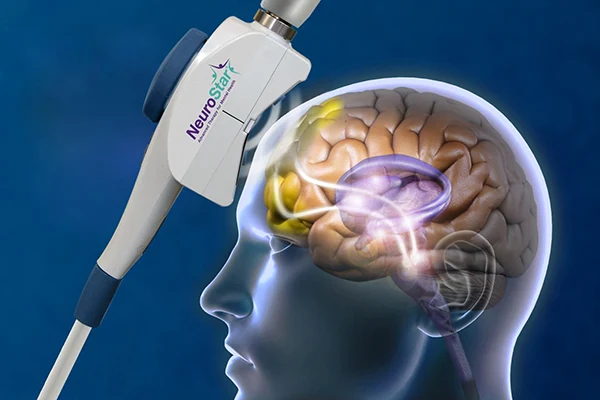
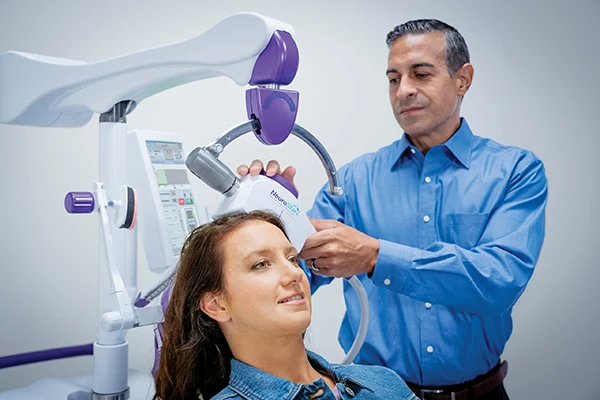
At FTTC, we offer NeuroStar TMS therapy. Our site describes it as FDA-cleared, drug-free and non-invasive, and it is not ECT (electroconvulsive therapy). During a session you recline in a treatment chair while a small, curved magnetic coil rests lightly on your head. You are awake the whole time.
How they differ day to day
The short answer: a pill fits into your day, while TMS means scheduled visits.
| Antidepressants | NeuroStar TMS | |
|---|---|---|
| What it is | Medication you take as prescribed | Magnetic stimulation delivered in an office |
| Daily routine | Taken as directed at home | Sessions at the office |
| Typical commitment | Ongoing, reviewed with your prescriber | About 19–37 minutes daily over 4–6 weeks for an initial course |
| Awake and alert | Depends on the medication | You are awake during treatment |
| After the visit | Not applicable | You can return to normal activities right away |
The TMS details above come from our NeuroStar page. Your own schedule may differ, so ask the team what a course would look like for you.
Neither path is a quick fix. Our site does not promise any particular result, and people respond differently, so the aim of a consultation is to match the option to you rather than the other way around. Weigh how much daily routine you can give, how you have tolerated medication before, and what matters most to you right now.
How the side effects compare
The short answer: they are different, and both are worth discussing.
Medications travel through your whole body, which is why they can have effects beyond mood. TMS is different. Our NeuroStar page explains that it does not circulate in the blood throughout the body, so it does not have side effects such as weight gain, sexual dysfunction, nausea, dry mouth or sedation.
TMS is not side-effect free. The most common side effects reported in clinical trials were headache and scalp discomfort, generally mild to moderate and occurring less frequently after the first week of treatment. Whatever you are considering, ask your clinician what is typical and what to do if something feels wrong.
When TMS may be worth asking about
The short answer: when medication has not helped enough, or the side effects are hard to live with.
Our NeuroStar page describes TMS as an alternative for people who are not responding to, or cannot tolerate, medications. It also notes that TMS is not a first-line treatment, which means it is usually discussed after other approaches have been considered. You might want to ask about it if:
- Medication has not relieved your depression symptoms enough.
- An antidepressant helped at first and then seemed to stop working.
- Side effects have made it hard to stay on a medication.
- You would like a non-medication option to add to your care.
At a consultation, expect a clinician to ask what you have tried, how long you tried it and what happened. They may also ask about side effects, your daily routine and your goals. There are no wrong answers: the aim is to understand your situation well enough to recommend TMS, or to rule it out, honestly.
If you are not sure whether you would be a candidate, our guide to who qualifies for TMS therapy in Las Vegas explains how eligibility is usually discussed.
It does not have to be either-or
Depression care is often built from several pieces: counseling, medication management with a prescriber, and sometimes TMS. Our NeuroStar page describes TMS as an option you can add to your care, and our individual counseling page notes that many clients pair counseling with other treatments as part of a fuller plan.
One firm rule: do not stop or change an antidepressant on your own. Changes to medication should always be made with the prescriber who knows your history.
Common misunderstandings
The short answer: a few myths make this decision harder than it needs to be.
- “Needing TMS means medication failed.” Medication helps many people, and asking about TMS does not mean you did anything wrong. Sometimes the fit or the side effects are the issue, not you.
- “TMS replaces everything else.” It does not have to. Our NeuroStar page describes it as an option you can add to your care, and counseling and medication management can continue alongside it as your clinicians advise.
- “TMS is a shock treatment.” It is not ECT. You are awake, there is no anesthesia, and our site says you can return to normal activities right away.
- “If it worked for someone else, it will work for me.” People respond differently. We cannot promise a particular result, and a clinician evaluates your situation before recommending anything.
- “It is too big a time commitment.” A course does ask for regular visits: about 19–37 minutes daily over four to six weeks for an initial course, according to our site. It can help to talk through scheduling at a consultation before you decide.
What this looks like at FTTC
At FTTC, the first step is a conversation. You can schedule a consultation with our NeuroStar Coordinator to find out whether this treatment is right for you, and a clinician then confirms whether TMS is appropriate for your situation.
If you and your clinician decide to go ahead, treatment is delivered in our Las Vegas office at 3909 South Maryland Parkway, Suite 405. TMS is not the only path, and it is not right for everyone. Counseling, medication management with your prescriber, or a combination may suit you better, and an honest evaluation should say so.
Questions to ask and how to prepare
- Based on my history, is TMS an appropriate option for me?
- How would TMS fit with my current medication or counseling?
- What would a course of treatment look like on my schedule?
- What side effects should I expect, and what should I do if they occur?
- What does my insurance require, and how can your office help?
- What would we do if TMS did not help enough?
To prepare, make a short list you can bring along:
- Each treatment you have tried, roughly when, and what happened.
- Any side effects that were hard to live with.
- Your current medications and supplements.
- Your goals, such as better sleep, energy or interest in daily life.
Having this on paper makes the conversation faster and more useful, whichever option you end up discussing.
Book a TMS consultation
If you are weighing TMS vs antidepressants and want to talk it through, we are glad to help. Call (702) 485-1313 or request an appointment. You can also read more about NeuroStar TMS therapy at FTTC.
Hours: Monday–Friday 8:00 am–7:00 pm, Saturday 9:00 am–3:00 pm, Sunday by appointment only.
This article is educational and does not replace evaluation by a licensed professional.
In crisis? Call or text 988. Emergency: call 911.
Is TMS better than antidepressants?
Neither is better for everyone. Antidepressants are often a first step, while our NeuroStar page describes TMS as an alternative for people who are not responding to, or cannot tolerate, medications. The right choice depends on your history, symptoms and preferences, which is why a clinician needs to evaluate your situation before recommending either one.
Can I take antidepressants and have TMS at the same time?
Our NeuroStar page describes TMS as a non-medication option that can be added to your care, and many people use it alongside other treatment. Whether it makes sense for you is a clinical decision. Do not stop or change a medication on your own; talk with your prescriber and your clinician first.
Does TMS cause the same side effects as antidepressants?
Our NeuroStar page explains that TMS does not circulate in the blood throughout the body, so it does not cause side effects such as weight gain, sexual dysfunction, nausea, dry mouth or sedation. The most common side effects reported in clinical trials were headache and scalp discomfort, generally mild to moderate.
Do I have to try antidepressants before TMS?
TMS is often discussed after other approaches have been considered, since it is not a first-line treatment. Requirements differ between clinicians and insurance plans, so the most reliable answer comes from a consultation where your history is reviewed and your questions are answered.
How do I know which one to ask about?
Start with what you have already tried, what helped, and what you could not tolerate. Bring that list and your goals to a consultation. A clinician can then explain which options may fit, including counseling, medication management with your prescriber, TMS, or a combination of these.