TMS Therapy Side Effects and Safety: What to Know First
Is TMS safe, and what side effects should you expect? Our NeuroStar page describes TMS as a non-invasive treatment in which you stay awake, with no negative effects on memory or sleep. The most common side effects reported in clinical trials were headache and scalp discomfort, generally mild to moderate and less frequent after the first week. Whether TMS is safe for you personally is decided by a clinician who reviews your health history.
Questions about safety are some of the most important ones to ask before any treatment. This guide gathers what our site says about side effects and screening, and the questions to bring to a consultation. It does not replace the advice of a licensed professional.
What TMS is, in brief
The short answer: a non-invasive treatment that uses magnetic pulses, delivered while you are awake.
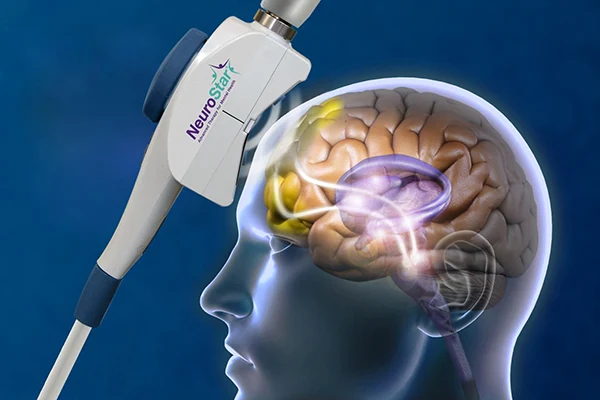
TMS (transcranial magnetic stimulation) uses a magnet to stimulate nerve cells in an area of the brain thought to control mood. At FTTC, we offer NeuroStar TMS therapy, which our site describes as FDA-cleared, drug-free and non-invasive. It is not ECT (electroconvulsive therapy), and it does not require anesthesia.
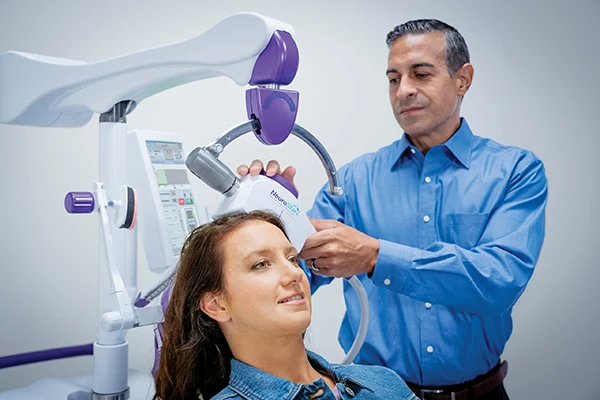
During a session, you recline in a treatment chair while a small, curved coil rests lightly on your head. If you would like a step-by-step picture, read our guide to what to expect during your first TMS session.
The most common side effects
The short answer: headache and scalp discomfort, usually mild to moderate.
Our NeuroStar page states that the most common side effects reported during clinical trials were headache and scalp discomfort. They were generally mild to moderate and occurred less frequently after the first week of treatment.
If you notice either, tell your clinician. They can talk with you about what is typical and what to do. Do not assume something is normal or serious on your own: ask, and let the team guide you.
What TMS does not do to the rest of your body
The short answer: it is not a medication, so it works differently from pills.
Our NeuroStar page explains that TMS does not circulate in the blood throughout the body. That is why it does not have side effects such as weight gain, sexual dysfunction, nausea, dry mouth or sedation. The site also says there are no negative effects on memory or sleep, and that you can return to normal activities right away.
This is one reason some people who could not tolerate medication side effects ask about TMS. It is not a promise that you will feel nothing, and a clinician can explain what to expect in more detail.
How safety screening works
The short answer: a clinician reviews your health history before recommending TMS, because it is not right for everyone.
Screening is a routine and important step, and it starts with an honest conversation. Expect questions about your medical history and any health conditions or devices that could matter for treatment. Tell the team everything, even if it seems unrelated. Those details are what let them recommend what is safe for you.
We do not publish a list of who can or cannot have TMS, because that decision belongs to a licensed clinician looking at your whole picture. If TMS is not appropriate for you, an honest evaluation should say so and discuss other options.
If you are wondering whether you might be a candidate, our guide to who qualifies for TMS therapy in Las Vegas explains how eligibility is usually discussed.
What to do if something feels wrong
You can tell the clinician during a session if the sensation is uncomfortable or too strong. Between visits, call our office at (702) 485-1313 if you notice anything that worries you. Keep a short note of when a headache or discomfort happens and how long it lasts, so you can describe it clearly.
For severe symptoms, or if you think it is an emergency, call 911. Do not wait for a callback.
Questions to ask about safety
- Based on my medical history, is TMS appropriate for me?
- What side effects should I expect, and how long do they usually last?
- What should I do if I get a headache after a session?
- Are there medications or conditions I should tell you about?
- What happens if I feel uncomfortable during a session?
- What would we do if TMS turned out not to be a good fit?
Common worries about TMS safety
The short answer: most of the fear comes from mixing TMS up with other treatments.
- “It is the same as ECT.” It is not. Our NeuroStar page states plainly that TMS is not ECT. You are awake, there is no anesthesia, and you can return to normal activities right away.
- “A magnet near my head must be dangerous.” Our site describes the magnet as similar in strength to the one used in an MRI machine, delivered in short, controlled sessions by a clinician. That does not mean it is right for everyone, which is why screening comes first.
- “It will change my personality or memory.” Our site says there are no negative effects on memory or sleep. If you notice anything that worries you, tell the team promptly so they can respond.
- “If a side effect appears, I am stuck with it.” You can tell the clinician during a session if something is uncomfortable, and you can call the office between visits. Headache and scalp discomfort were generally mild to moderate and became less frequent after the first week.
- “Safe for someone else means safe for me.” Two people with similar symptoms can have different health histories. Your own screening is what counts.
If you would like a calm, step-by-step picture of a visit before you decide, our guide to what to expect during your first TMS session walks through it.
What this looks like at FTTC
At FTTC, the first step is a conversation, not a procedure. You can schedule a consultation with our NeuroStar Coordinator, who can explain the process, and a clinician confirms whether TMS is appropriate for your situation.
If you go ahead, treatment takes place in our Las Vegas office at 3909 South Maryland Parkway, Suite 405. TMS is not the only path, and it is not the right fit for everyone. Counseling, medication management with your prescriber, or a combination may be a better match, and we will tell you if that is the case.
Book a TMS consultation
If you have safety questions about TMS, we are glad to talk them through. Call (702) 485-1313 or request an appointment. You can also read more about NeuroStar TMS therapy at FTTC.
Hours: Monday–Friday 8:00 am–7:00 pm, Saturday 9:00 am–3:00 pm, Sunday by appointment only.
This article is educational and does not replace evaluation by a licensed professional.
In crisis? Call or text 988. Emergency: call 911.
Is TMS therapy safe?
Our NeuroStar page describes TMS as non-invasive and FDA-cleared, and says you are awake during treatment with no negative effects on memory or sleep. Safety still depends on your own health history, so a clinician screens you before recommending TMS and talks through any concerns during your consultation.
What are the most common TMS side effects?
According to our NeuroStar page, the most common side effects reported during clinical trials were headache and scalp discomfort. These were generally mild to moderate and occurred less frequently after the first week of treatment. Tell your clinician about anything you notice so they can talk it through with you.
Does TMS affect memory or cause drowsiness?
Our site says there are no negative effects on memory or sleep, you are awake during treatment, and you can return to normal activities right away. Because everyone is different, tell the team about anything unusual after a session, and ask them what is typical so you know what to expect.
Who should not have TMS?
That is a decision for a licensed clinician after reviewing your medical history, so we do not list rules here. Be open about your full health history, including any conditions, devices or past events that seem unrelated. Our team uses that information to recommend what is safe for you, or to suggest another approach.
What should I do if I feel unwell after a session?
Contact our office at (702) 485-1313 and describe what you are feeling, so the team can advise you. Mention it at your next visit as well. If you have severe symptoms or think it is an emergency, call 911 right away rather than waiting for a callback.