How Long Does TMS Therapy Take? A Realistic Timeline

How long does TMS therapy take? Our NeuroStar page describes a typical initial course as about 19 to 37 minutes of treatment daily over four to six weeks. Each session is short and you can return to normal activities right away, but the course asks for regular visits for several weeks. Your own plan is set by a clinician, so treat these numbers as a guide and ask what yours will look like.
Planning around a daily appointment is a practical question as much as a medical one. This guide breaks down the time involved, what can affect it, and how to prepare, so you can decide whether TMS fits your life. It does not replace advice from a licensed professional.
The short version of a TMS timeline
The short answer: short sessions, repeated daily, for roughly one to one and a half months.
| Piece of the timeline | What our site says |
|---|---|
| Length of a session | About 19–37 minutes of treatment |
| How often | Daily |
| Typical initial course | About 4–6 weeks |
| Where it happens | In the NeuroStar doctor’s office |
| After a session | You can return to normal activities right away |
These details come from our NeuroStar TMS therapy page. They describe a typical initial course, not a promise for any one person. Your clinician decides the plan after your consultation.
What happens in a single visit
The short answer: you arrive, settle into a chair, receive treatment, and carry on with your day.
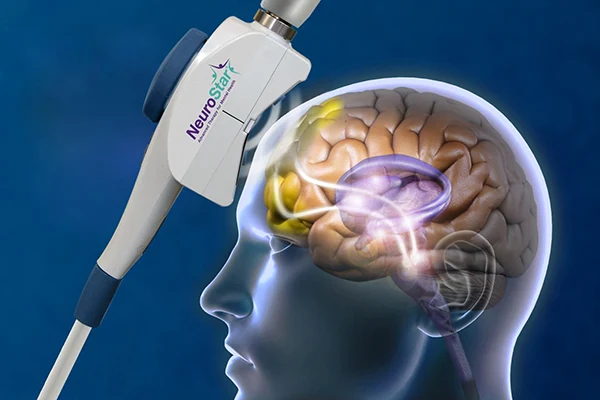
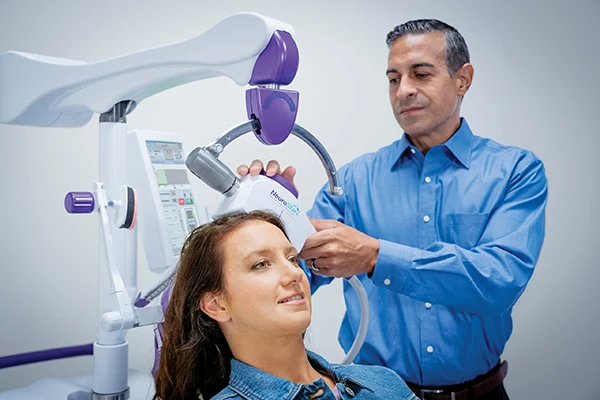
During a session you recline in a treatment chair while a small, curved magnetic coil rests lightly on your head, and you stay awake throughout. Our site describes sessions as conducted in your NeuroStar doctor’s office, with no negative effects on memory or sleep.
Allow extra time at your first visit while the team gets you comfortable and answers your questions. For a calm, step-by-step picture, read our guide to what to expect during your first TMS session.
Why the course takes several weeks
The short answer: TMS is delivered in a series of sessions, not a single appointment.
Instead of one treatment, TMS is given as a course of regular visits. Spreading sessions over several weeks is simply how an initial course is structured. Because everyone responds differently, your clinician reviews how you are doing and talks with you about the plan as you go.
We cannot predict when any one person will notice a change, and some people may not. Our site does not promise a particular timeline for results, so be wary of anyone who does.
Keeping track along the way
A simple log can make the weeks feel more manageable. After each session, jot down the date, how you slept, your energy and mood on a scale of one to ten, and anything you noticed, such as a headache or scalp discomfort and how long it lasted. Our site notes that these side effects, when they occur, were generally mild to moderate and became less frequent after the first week of treatment, so a log helps you and your clinician spot patterns. Bring it to your check-ins. It also gives you something concrete to look back on, rather than relying on memory.
What can affect your schedule
The short answer: your clinician’s plan, your availability and how you are doing.
Ask the team how each of these might change your timeline:
- The plan your clinician recommends, which is based on your history and needs.
- Your availability. Daily visits mean building appointments into your week.
- Missed sessions. Ask what happens if you need to miss a day, such as for illness or travel.
- How you are responding. Your clinician will review progress and talk with you about any changes.
None of this is fixed in advance, which is why a consultation is the best place to get a realistic calendar.
Planning your life around TMS
The short answer: a little planning makes daily visits much easier.
- Work and school. Look at your week and note the times that are easiest to protect.
- Transport. Plan how you will get to and from the office each day, and what to do if plans change.
- Family. If you care for children or others, think about who can help on treatment days.
- Energy. Our site says you can return to normal activities right away, but it can help to avoid scheduling something demanding immediately afterward on your first day.
- Support. Tell someone close to you what you are doing, so they can help you keep going.
If any of these are hard, say so at your consultation. Practical barriers are worth solving up front.
What this looks like at FTTC
At FTTC, the first step is a conversation, not a commitment. You can schedule a consultation with our NeuroStar Coordinator, who can explain the process and what a course would look like for you, and a clinician confirms whether TMS is appropriate for your situation.
If you go ahead, treatment takes place in our Las Vegas office at 3909 South Maryland Parkway, Suite 405. TMS is not the only path, and it is not the right fit for everyone. If the time commitment does not suit your life right now, counseling, medication management with your prescriber or another approach may be a better place to begin, and we will say so.
Questions to ask about time
- How long will my sessions be, and at what times can you see me?
- What does the full initial course look like on a calendar?
- What if I have to miss a session?
- How will we know whether TMS is helping, and when will we check in?
- What would happen after the initial course?
Book a TMS consultation
If you are wondering whether a TMS schedule could work for you, we are glad to talk it through. Call (702) 485-1313 or request an appointment. You can also read more about NeuroStar TMS therapy at FTTC.
Hours: Monday–Friday 8:00 am–7:00 pm, Saturday 9:00 am–3:00 pm, Sunday by appointment only.
This article is educational and does not replace evaluation by a licensed professional.
In crisis? Call or text 988. Emergency: call 911.
How long is a single TMS session?
Our NeuroStar page describes a typical initial course as about 19 to 37 minutes of treatment daily. Your first visit may run longer while the team gets you settled and answers questions, so plan some extra time. Ask the office what your own appointment length will be, since plans are set by your clinician.
How many weeks does a course of TMS last?
According to our NeuroStar page, a typical initial course is about four to six weeks, with treatment daily. Your clinician decides the plan that fits you and will talk with you about what comes after the initial course. Ask for a calendar at your consultation so you can plan around work and family.
When will I start to feel a difference?
We cannot predict that, because people respond differently and some may not notice a change. Our site does not promise any particular result. Keep a simple note of your sleep, energy and interest in daily life, and share it with your clinician, who can tell you how progress is usually reviewed.
Can I work while I have TMS?
Our NeuroStar page says you can return to normal activities right away, and sessions are conducted in the office. Many people plan visits around their day. Talk through your work hours and transport at your consultation so the team can help you find appointment times that are realistic for you.
What happens after the initial course ends?
Your clinician will talk with you about how you are doing and what the next steps could be, which may include counseling, medication management with your prescriber or other support. We do not set that plan in advance, because it depends on your response and your goals. Ask about it at your consultation.